
Affordable and income-restricted housing in DFW: how it works
By Sofia Kowalski · Updated 2026-06-29
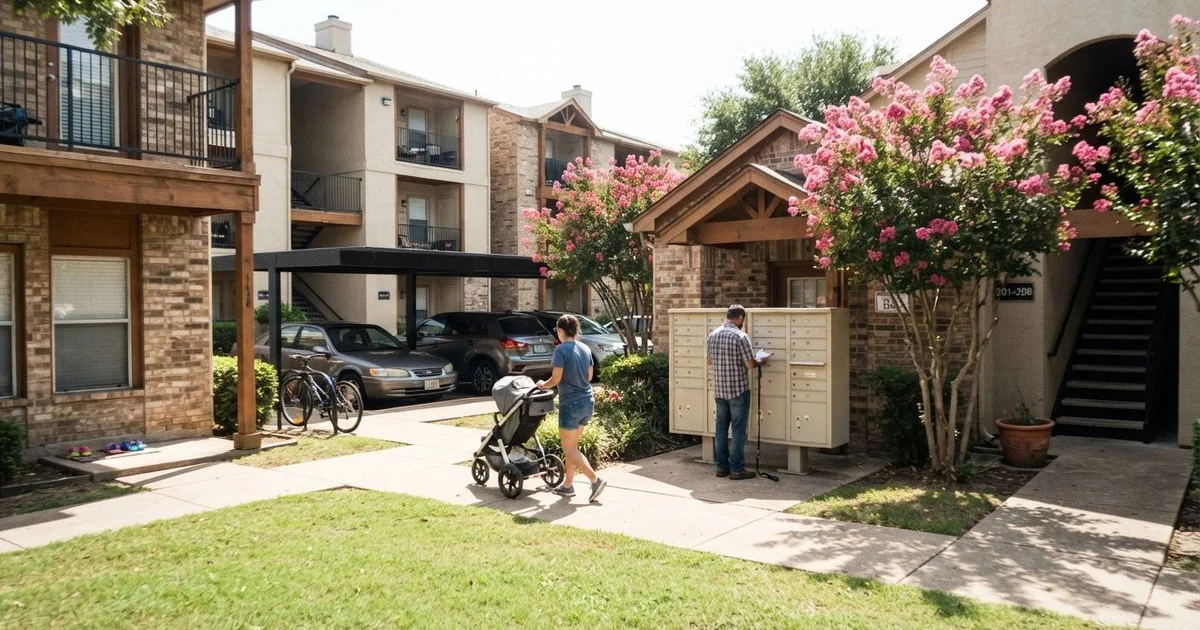
Affordable and income-restricted housing is one of the highest-demand categories in the DFW Metroplex, and it’s also one of the most misunderstood. It isn’t simply “cheaper” market-rate housing. It’s a distinct category with its own eligibility rules, application process, and paperwork. Here’s how it actually works.
You can browse current affordable and income-restricted communities in the Metroplex to see which properties have availability and what income bands they serve.
What “income-restricted” actually means
Income-restricted units set both the rent and the tenant’s eligibility based on household income relative to the area median income (AMI) for the region. A property might restrict units to households earning at or below a set percentage of AMI, with rent capped accordingly. This is different from a landlord simply offering a lower market rate. The restriction is typically tied to financing or a public program the property participates in, and it comes with ongoing income verification, not just a one-time check at move-in.
It also means a unit can stay income-restricted for years or decades, since the rules are attached to the building’s financing agreement rather than a landlord’s short-term pricing decision. That’s part of why these communities tend to have more consistent long-term residents than a typical market-rate property, and why a specific unit’s availability can depend as much on turnover as on new construction.
How eligibility usually works
| Step | What it involves |
|---|---|
| Income documentation | Pay stubs, tax returns, or benefit statements to verify household income |
| Household size | Income limits scale with the number of people in the household |
| AMI band | The property discloses which income percentage band a unit is restricted to |
| Annual recertification | Many programs require you to re-verify income periodically after move-in |
Income limits and the exact AMI bands vary by property and by program, so the specific numbers for a listing you’re interested in should come directly from that property’s leasing office rather than a general assumption. If a housing voucher is part of your plan alongside an income-restricted unit, the Section 8 and housing voucher guide covers how the two programs interact.
Why the category has such strong demand
Affordable and income-restricted housing consistently draws some of the highest search interest of any apartment category in the Metroplex, and the reasons are straightforward: rent growth has outpaced income growth for a lot of households, and a rent-capped unit can mean the difference between a workable budget and a stretched one. That demand is also why availability moves quickly and waitlists are common. It’s worth treating a real opening as time-sensitive rather than something to think over for weeks.
How the application process differs from market-rate renting
Expect a longer process than a standard apartment application. Income-restricted properties typically require more documentation upfront, and many maintain a waitlist, especially for smaller units or the lowest income bands. It’s common practice to apply to several properties at once rather than waiting on a single application, since availability can take weeks or months to materialize depending on turnover.

What to ask before you apply
- What income band is this specific unit restricted to, and does my household qualify?
- Is there a current waitlist, and roughly how long has it been running?
- What documentation do you need up front to start the application?
- Is annual income recertification required to stay in the unit?
- Are utilities included, or budgeted separately from the restricted rent?
- What happens to my rent if my income changes during the lease term?
- Is this property part of a specific public program, and does that affect how disputes or renewals are handled?
That last question matters more than it sounds. Income-restricted housing tied to a public financing program often comes with tenant protections and renewal rules that differ from a standard market-rate lease, so understanding which program a property participates in can clarify what happens down the road, not just at move-in.
Getting started
If you think you may qualify, start by identifying a few properties in the category and calling ahead rather than showing up expecting immediate availability. A short call to the leasing office to confirm the current income band and waitlist status can save you from submitting paperwork to a property you don’t actually qualify for. Our scoring methodology explains how we evaluate communities across categories, and you can always return to the directory home page to compare against other apartment types in the Metroplex.
Questions people ask
- What does income-restricted mean for an apartment?
- It means the unit's rent and your eligibility are tied to your household income relative to the area median income for the region, rather than the property simply charging whatever the market will bear.
- How do I know if I qualify for affordable housing in DFW?
- Eligibility depends on household size and income relative to published area median income limits, which vary by property and program. The property's leasing office can tell you the exact income band a specific unit is restricted to.
- Is affordable housing the same as Section 8?
- No. Affordable or income-restricted housing caps the rent itself based on income limits. Section 8 is a separate voucher program that helps pay rent at a range of properties, including some market-rate ones. They can overlap, but they're not the same thing.
- Do income-restricted apartments have waitlists?
- Many do, especially for smaller unit sizes or the most affordable income bands. It's common to apply to more than one property and expect some wait time rather than an immediate opening.