
What apartments cost in the DFW Metroplex and what changes the price
By Sofia Kowalski · Updated 2026-06-25
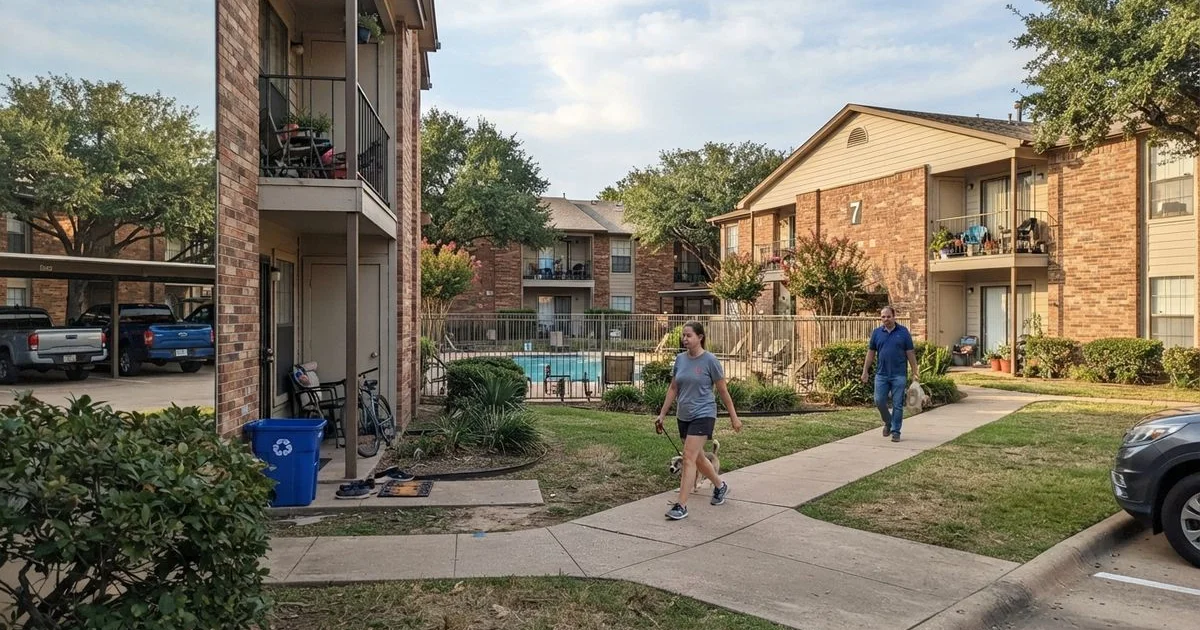
Rent in the DFW Metroplex spans a wide range, and the headline number on a listing rarely tells the whole story. Two apartments with the same square footage can cost noticeably different amounts depending on the type of community, the fees layered on top of rent, and what’s included versus billed separately. Here’s what actually moves the price, and how to budget for it realistically.
Community type is the biggest lever
The Metroplex has a genuinely wide spread of apartment types, and each comes with its own baseline cost structure:
- Luxury high-rise communities carry the highest rents, driven by structured parking, staffed amenities, and premium finishes.
- Garden-style and suburban communities generally offer more space per dollar, with surface parking and fewer shared-building costs to pass on.
- Affordable and income-restricted communities cap rent based on a household’s income relative to the area median, which is a fundamentally different pricing model from market-rate housing.
- Senior and 55+ communities price based on unit size and included services, and sometimes bundle amenities like transportation or meal plans that a standard community wouldn’t offer.
Before you start comparing individual listings, it helps to know which category you’re actually shopping in, since that alone explains a lot of the price spread you’ll see. Jumping between categories while comparing rent, say, a luxury high-rise listing against a garden-style one, tends to produce a confusing, apples-to-oranges picture rather than a useful budget number.
What’s typically included versus billed separately
| Cost item | Often included in rent | Often billed separately |
|---|---|---|
| Water and trash | Sometimes, varies by property | Common as a flat monthly fee |
| Parking (surface) | Usually included | Rare to charge extra |
| Parking (garage) | Sometimes at luxury properties | Common as a separate monthly fee |
| Pet rent | Never | Almost always, plus a one-time fee |
| Amenity access (gym, pool) | Usually included | Occasionally a separate amenity fee |
The real cost of moving in
The monthly rent is only part of the budget. Most leases require a security deposit (often close to one month’s rent), an application and admin fee, and first month’s rent before you get keys. If you’re bringing a pet, add a one-time pet deposit or fee that commonly runs $200 to $500 per pet, on top of ongoing monthly pet rent. Adding these up before you start touring, rather than after you’ve fallen for a unit, avoids an unpleasant surprise at lease signing.
It’s worth writing this total out as an actual number before you apply anywhere. Renters who only budget for the monthly rent figure are often caught off guard by how much cash they need on hand just to get the keys, and that gap is one of the more common reasons a move-in date slips.

How much of your income should go to rent
The most common budgeting guideline is 20 to 30 percent of gross monthly income, though renters in competitive submarkets sometimes stretch closer to 40 percent. That said, your personal budget guideline matters less than the property’s own approval threshold: many DFW communities set a minimum income requirement around 2.5 to 3 times the monthly rent, and they’ll check it during the application process regardless of what you personally think you can afford. It’s worth checking that math against your income before you tour a unit you won’t actually qualify for.
Getting a realistic number for your search
Rather than anchoring to an average that may not apply to your situation, narrow by community type first, since that determines the baseline price range you’re actually shopping in. From there, the fee questions above (parking, pets, deposits) will tell you the real monthly and upfront number for a specific property. Our scoring methodology explains how pricing factors into the rankings you’ll see across the directory, and the DFW Multifamily Property Directory home page is the fastest way to browse by category and start comparing.
Questions people ask
- How much should I budget for rent as a percentage of income?
- A common rule of thumb is 20 to 30 percent of gross monthly income, though some renters stretch to 40 percent in tighter markets. Most communities also set their own minimum income requirement, often around 2.5 to 3 times the monthly rent.
- What upfront costs come with signing a lease, beyond first month's rent?
- Expect a security deposit, an application or admin fee, and, if you have a pet, a one-time pet deposit or fee commonly in the $200 to $500 range per pet on top of monthly pet rent.
- Why do two similar-looking apartments cost so differently?
- Community type is the biggest factor. A luxury high-rise with structured parking and staffed amenities costs more to operate than a garden-style community with surface parking, and that cost difference shows up directly in rent.
- Is rent in Dallas or Fort Worth generally cheaper?
- It depends on the specific submarket and community type more than the city as a whole. Downtown and Uptown-adjacent areas in either city tend to price higher than suburban garden-style communities further out.