
Garden-style vs high-rise apartments in DFW: how daily life differs
By Sofia Kowalski · Updated 2026-07-07
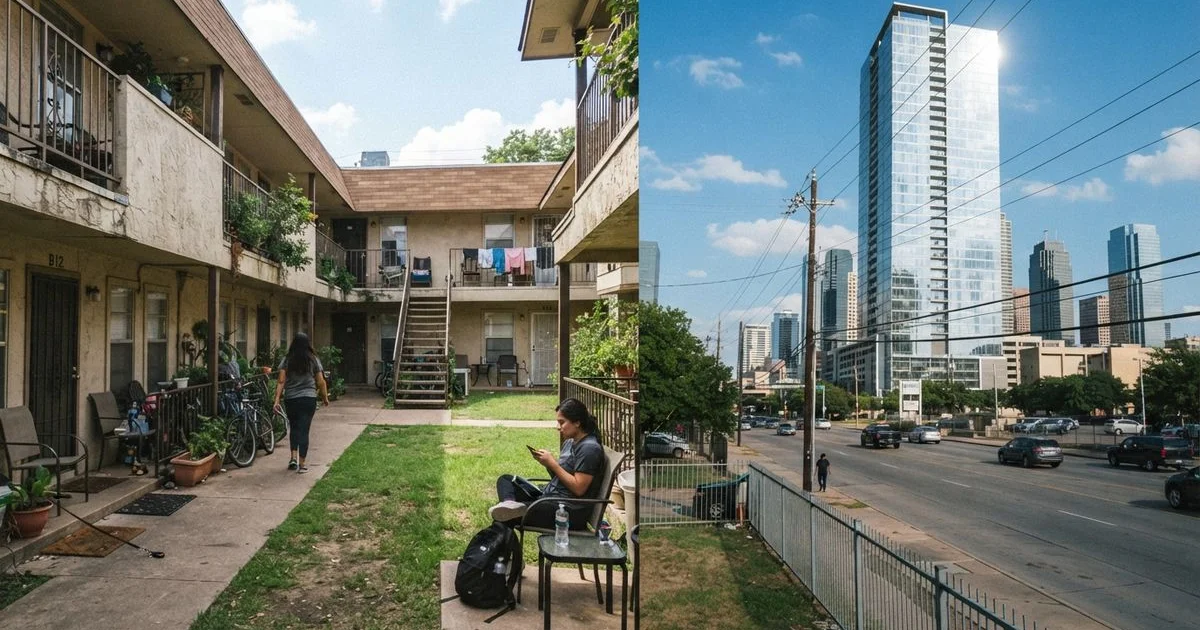
Garden-style and high-rise are the two most different living experiences in the DFW apartment market, and the difference goes well beyond the view. If you’re deciding between the two, the day-to-day details matter more than the marketing photos.
Garden-style communities are worth comparing directly: browse current garden-style and suburban communities in the Metroplex to see layouts, amenities, and pricing.
The core tradeoff
A high-rise gets you walkability, skyline views, and often a downtown or Uptown location. A garden-style community gets you more space per dollar, easier parking, and typically a quieter, more ground-level living experience. Neither is objectively better. It comes down to what your daily routine actually looks like.
Side-by-side comparison
| Garden-style | High-rise | |
|---|---|---|
| Parking | Surface lot, usually included | Garage, often a separate fee |
| Noise | Fewer shared walls, generally quieter | More shared walls and hallway traffic |
| Access | Ground-level or short stairs | Elevator-dependent |
| Amenities | Pool, courtyard, sometimes a clubhouse | Concierge, gym, rooftop deck, package room |
| Typical location | Suburban, more space between buildings | Urban core, walkable districts |
| Move-in day | Truck parks close to your door | Service elevator, sometimes scheduled |
Noise and privacy
Quiet community is one of the more consistent praise themes among garden-style residents across the Metroplex, likely because fewer shared walls and less hallway or elevator traffic mean less incidental noise. High-rises can be just as quiet in a well-built, well-managed property, but shared walls, elevators, and common hallways introduce more opportunities for noise than a garden-style layout typically has.
Parking and daily access
This is one of the most underrated differences. At a garden-style community, you usually park close to your unit and walk straight in. At a high-rise, you’re often parking in a garage, sometimes for a separate monthly fee, and taking an elevator to reach both your car and your unit. If you carry groceries in multiple trips or have mobility concerns, this daily friction adds up.
The same logic applies to move-in day. Garden-style communities usually let a moving truck park close to a ground-level or short-stair entrance, which keeps the process simple. High-rises often require booking a service elevator for a set window, and missing that window can mean rescheduling an entire move. It is a small detail until you are the one standing in a hallway with a couch and no elevator access.
Amenities and community feel
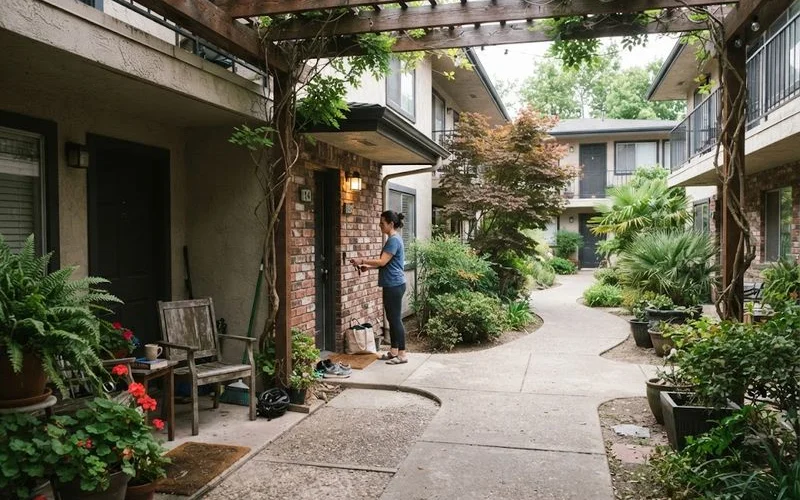
High-rises tend to lean into shared, building-wide amenities: a staffed lobby, a rooftop deck, a resident lounge, sometimes a package room with refrigerated storage. Garden-style communities lean toward outdoor, spread-out amenities: a pool, a courtyard, sometimes a dog park or grilling area. Neither approach is better, but they create a genuinely different sense of community. High-rise amenities tend to concentrate residents in shared indoor spaces, while garden-style amenities tend to spread people out across more open, outdoor areas.
Which fits your life better
Consider a high-rise if you want walkability, don’t mind trading space for location, and will genuinely use amenities like a fitness center or rooftop deck. Consider garden-style if you want more square footage for the price, easier day-to-day parking, ground-level or low-stair access, and a quieter setting, especially if you have kids, pets, or move frequently between your unit and your car.
Think honestly about your actual weekly routine rather than an idealized one. If you picture yourself walking to a coffee shop most mornings, a high-rise’s location premium is buying you something real. If your week mostly involves driving to work, hauling groceries, and wanting a yard-adjacent space to unwind, garden-style is probably the better use of your budget, even if the high-rise photos are more exciting to scroll through.
Neither type is right or wrong. It’s worth touring one of each before you commit, since photos rarely capture how different the daily experience actually feels. For more on how pricing and amenities factor into our rankings across both categories, see our scoring methodology, or head to the directory home page to compare all community types in the Metroplex.
Questions people ask
- Which is quieter, garden-style or high-rise?
- It depends on the specific building, but garden-style communities tend to have fewer shared walls and hallways per unit, and quiet community is one of the more common praise themes in resident feedback for suburban garden-style properties.
- Is parking easier at a garden-style community?
- Usually. Most garden-style communities offer surface parking close to your unit, while high-rises often use a parking garage that may carry a separate monthly fee and involve an elevator ride to reach your car.
- Which is better for a family with kids?
- Garden-style communities more often have ground-level access, courtyards, and green space, which tends to suit families and pets better than a high-rise with elevator-dependent access to every unit.
- Is move-in day harder in a high-rise?
- Often, yes. High-rises typically require using a service elevator, sometimes with a reserved time window, while garden-style units usually allow a truck to park close to a ground-level or short-stair entrance.