
Helping an aging parent choose a senior living apartment in DFW
By Sofia Kowalski · Updated 2026-08-04
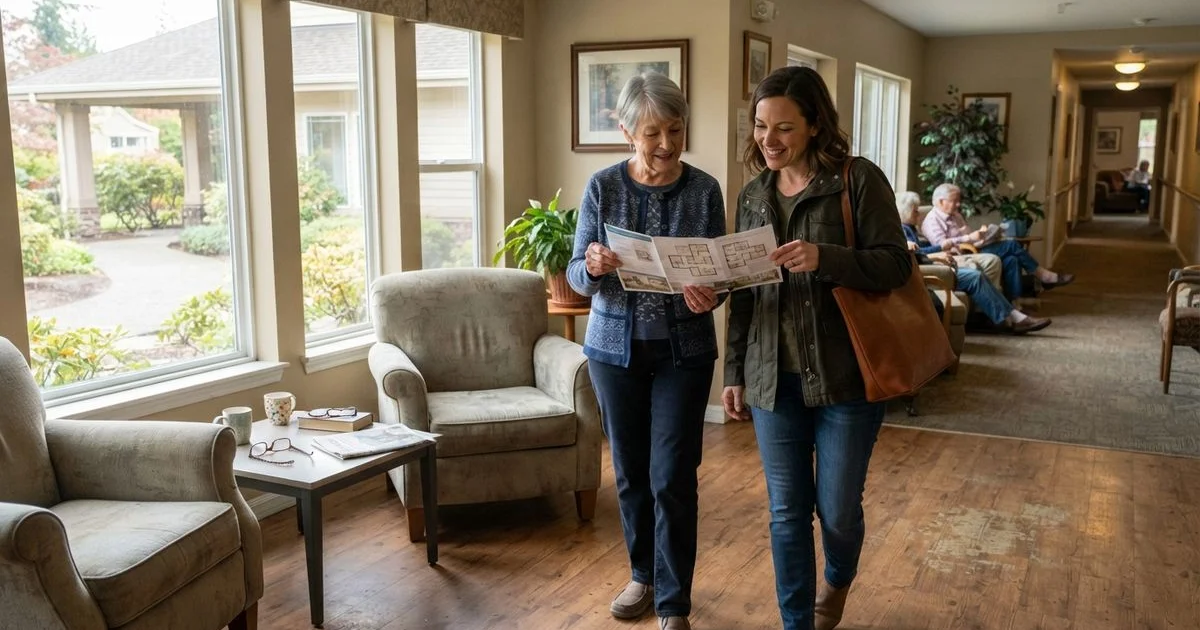
Helping a parent look for a new apartment is different from apartment hunting for yourself. It’s not just a budget and floor plan decision, it’s a conversation about independence, and it deserves to be handled carefully and at a pace your parent is comfortable with.
The Metroplex has a dedicated category of senior and 55+ living communities worth exploring together, since these are built specifically around independent living for older residents rather than being a general apartment search with an age filter applied after the fact.
Start with what kind of housing actually fits
Senior and 55+ apartment communities are independent living: residents live on their own, without on-site medical or personal care staff, in a community built around an older resident base and often with age-appropriate amenities and programming. This is a meaningfully different category from assisted living or a nursing facility, which provide daily medical or personal care support. If your parent’s needs go beyond independent living, this guide’s scope, and the directory’s category, may not be the right fit, and it’s worth researching care-focused housing options separately.
A useful way to sort this out early is to have an honest conversation, ideally with your parent’s input, about what daily tasks they currently manage on their own versus what they need help with. If the answer is mostly household upkeep and reducing isolation, independent 55+ living is often a strong fit. If it includes daily medication management, mobility assistance, or other personal care, that points toward a different category of housing entirely. For a fuller picture of daily life in these communities, the what to expect from a senior living community guide walks through amenities and the application basics in more detail.
What to prioritize during the search
| Priority | Why it matters |
|---|---|
| Accessibility | Elevator access or ground-floor units matter more here than in a general search |
| Proximity | Distance to family, familiar medical providers, and pharmacies |
| Social programming | Isolation is a real risk for older residents living alone; community activities help |
| Maintenance-free living | Many parents are moving specifically to shed home upkeep responsibilities |
| Cost and budget | Understand fixed income constraints and whether any units are income-qualified |
How to have the conversation
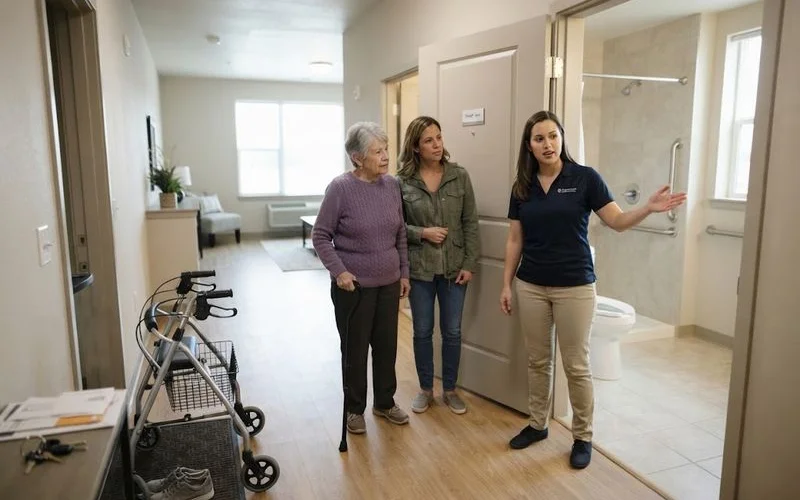
Frame the search as exploring options together, not presenting a decision already made. Many older adults resist a move because it feels like a loss of independence, not because of anything wrong with the housing itself. Involve your parent directly in touring, ask what matters to them specifically, and avoid framing the move purely around your own convenience or peace of mind, even if that’s part of your motivation.
What to ask on a tour together
- What social or community activities are regularly offered, and how often?
- How’s the balance between privacy and community, day to day?
- What’s the process if a resident’s needs change over time?
- Are any units income-qualified, and if so, what documentation is needed?
- How responsive is maintenance, and is that reflected in current resident feedback?
- What’s the average age and general activity level of current residents, since communities vary widely on this?
If your parent is resistant
Slow down. Tour a few communities without any pressure to decide on the spot. Focus conversations on what they’d gain: less home maintenance, more social connection, a sense of community, rather than dwelling on what they’re leaving behind. A decision made collaboratively, even if it takes longer, tends to go far better than one that feels imposed.
It can also help to involve a neutral third party, like a sibling, close friend, or your parent’s physician, if the conversation keeps stalling. Sometimes hearing the same idea from a different voice makes it land differently than when it comes from an adult child alone.
Helping a parent through this transition is emotionally loaded work on top of a practical search. Give it the time it needs. For more on how we evaluate senior living communities, see our scoring methodology, or return to the directory home page to keep exploring together.
Questions people ask
- How is 55+ apartment living different from assisted living or a nursing home?
- Senior and 55+ apartment communities are independent living, meaning residents live on their own without on-site medical or personal care staff. If your parent needs daily medical or personal care support, that's a different category of housing to look into.
- How do I bring up the topic without it feeling like I'm taking over?
- Frame it as exploring options together rather than presenting a decision already made. Involve your parent in touring and choosing, and be clear that the goal is finding a place that fits their life, not a place that's more convenient for you.
- What should we prioritize on a tour?
- Accessibility features like elevator access or ground-floor units, proximity to family or medical providers your parent already uses, and the social and amenity programming, since isolation is a real concern for many older renters living alone.
- What if my parent is resistant to moving?
- Resistance is common and usually about loss of independence, not the housing itself. Slow down, tour a few places without pressure to decide, and focus the conversation on what they'd gain, like less home maintenance or more social connection, rather than what they're giving up.