
What to expect from a senior living community in DFW
By Sofia Kowalski · Updated 2026-08-08
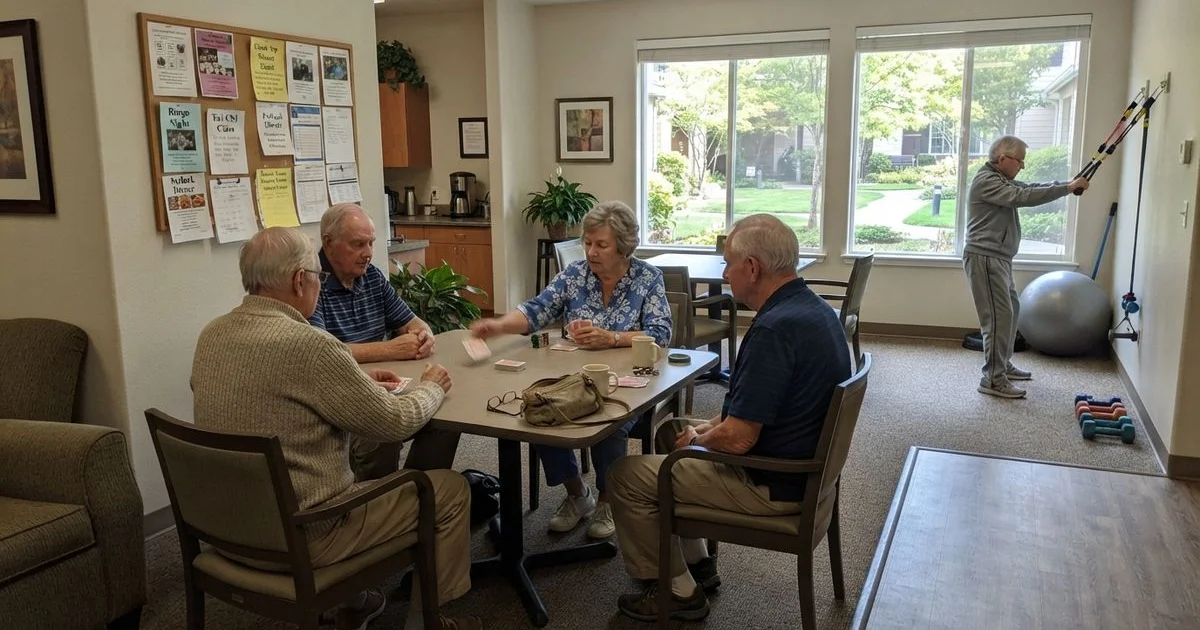
If you’re new to researching 55+ apartment living, it helps to know what the day-to-day actually looks like before you start touring. Here’s a realistic picture of what to expect from a senior living community in the DFW Metroplex.
You can browse current senior and 55+ living communities in the Metroplex to compare amenities and availability directly.
Who these communities are built for
Senior and 55+ apartment communities are independent living: residents manage their own daily lives without on-site medical or personal care staff. Most require at least one resident in the household to meet the minimum age, commonly 55, with some flexibility for a younger spouse or partner depending on the property’s specific policy. This is a distinct category from assisted living or nursing care, which provide daily medical or personal support and serve a different set of needs entirely.
Residents choose this category for a wide range of reasons: downsizing from a larger home, wanting less maintenance responsibility, moving closer to family, or simply preferring to live among neighbors in a similar life stage. It’s worth knowing that going in, since the mix of reasons shapes the community’s overall culture more than any single amenity does.
What amenities typically look like
| Amenity type | What it usually includes |
|---|---|
| Accessibility | Single-story layouts or elevator access, sometimes grab bars or wider doorways |
| Social spaces | Community rooms, organized activities, group outings |
| Maintenance | Exterior and landscaping maintenance handled by the property |
| Wellness | On-site fitness spaces or wellness programming in some communities |
| Transportation | Some properties offer scheduled transportation; confirm availability directly |
A typical day-to-day feel
Compared to a general-population apartment community, senior living tends to have more organized social programming and a stronger emphasis on community connection, since isolation is a genuine concern for older adults living alone. Many residents describe the atmosphere as quieter and more predictable than a mixed-age community, with regular activities like group meals, card games, or fitness classes creating built-in opportunities to socialize without leaving home.
That said, not every community has the same level of programming, and some lean more toward quiet independence than organized activity. If a strong social calendar matters to you, ask specifically about attendance at recent events rather than just the printed activity schedule, since a long list of activities on paper doesn’t always reflect what actually happens week to week.

Eligibility and application basics
Beyond the standard application steps common to any apartment (proof of income, ID, background check), 55+ communities typically verify age eligibility for at least one household member. Some communities also offer income-qualified units, in which case income documentation applies on top of the standard age requirement. It’s worth asking directly which requirements apply to a specific property and unit before you tour, since combining age and income eligibility can narrow your options more than a general apartment search would.
Questions worth asking on a tour
- What social activities happen regularly, and how many residents typically attend?
- Is transportation offered, and to where?
- What’s the pet policy, including size limits and any additional fees?
- How is maintenance response handled, and what does recent resident feedback say about it?
- Are any units income-qualified, and what would that require?
Getting a feel for it
The best way to understand what daily life is really like is to tour at a time when residents are around, not just during a quiet weekday morning. Ask to see a community room or common area in use if possible. A community that feels active and social on a random visit is a good sign that the amenities aren’t just marketing.
If you can, talk to a current resident during your visit rather than relying only on the leasing agent’s description. Someone who actually lives there day to day will usually give you a more grounded sense of whether the social programming is well attended or mostly exists on paper. If you’re helping a parent make this decision rather than choosing for yourself, the guide to helping an aging parent choose a senior apartment covers how to approach the search and the conversation together. For more on how we evaluate these communities, see our scoring methodology, or return to the directory home page to keep exploring.
Questions people ask
- What's the minimum age to live in a 55+ community?
- Most 55+ communities require at least one resident in the household to be 55 or older, with some flexibility for a younger spouse or partner, though exact policies vary by property and are worth confirming directly.
- What amenities are typical in senior apartment communities?
- Common amenities include maintenance-free living, single-story or elevator-accessible units, community social spaces, organized activities, and sometimes on-site fitness or wellness programming built for an older resident base.
- Is senior living the same as assisted living?
- No. Senior and 55+ apartment communities are independent living, meaning residents live on their own without on-site medical or personal care staff. Assisted living and nursing facilities provide daily care support and are a separate category.
- Can I bring a pet to a senior living community?
- Many communities do allow pets, sometimes with size or breed restrictions and the usual pet deposit or monthly pet rent. Confirm the specific policy with each property, since it varies.