
Texas security deposit law: what DFW apartment renters need to know
By Sofia Kowalski · Updated 2026-07-17
This is general information about how Texas security deposit rules typically work, not legal advice. Landlord-tenant law can change and details vary by situation, so confirm current requirements with the Texas Attorney General’s office or a local attorney before relying on it for a specific dispute.
Security deposit disputes are one of the more common friction points renters report after moving out of a DFW apartment. Understanding the basic framework of how Texas handles deposits can help you avoid a dispute in the first place, and know what to do if one comes up despite your best efforts.
The general framework
Texas law generally requires a landlord to return your security deposit, or provide an itemized list of any deductions, within 30 days after you move out and give the landlord a forwarding address in writing. If the landlord doesn’t follow this process, they may lose the right to withhold any part of the deposit or to sue you for damages. Deductions are typically meant to cover unpaid rent or damage beyond normal wear and tear, not routine cleaning or minor cosmetic marks from ordinary living.
The 30-day clock generally starts once you’ve both moved out and given the landlord a forwarding address, not simply when your lease ends. If you delay giving that address, you may unintentionally delay the deadline the landlord is working against, so handling that step promptly on move-out day is worth prioritizing.
Normal wear and tear vs damage
| Generally normal wear and tear | Generally deductible damage |
|---|---|
| Minor carpet fading from sunlight | Large stains, burns, or pet damage |
| Small nail holes from hanging pictures | Holes from unrepaired large fixtures |
| Faded paint over time | Unauthorized paint colors requiring repainting |
| Minor scuffs on floors | Deep gouges or broken flooring |
This distinction is where most disputes happen, since “damage” is somewhat subjective. Good documentation is your best protection, and it matters more than trying to memorize every line of the wear-and-tear distinction, since a clear photo record settles most disagreements faster than an argument over definitions.
How to protect your deposit before you even move in
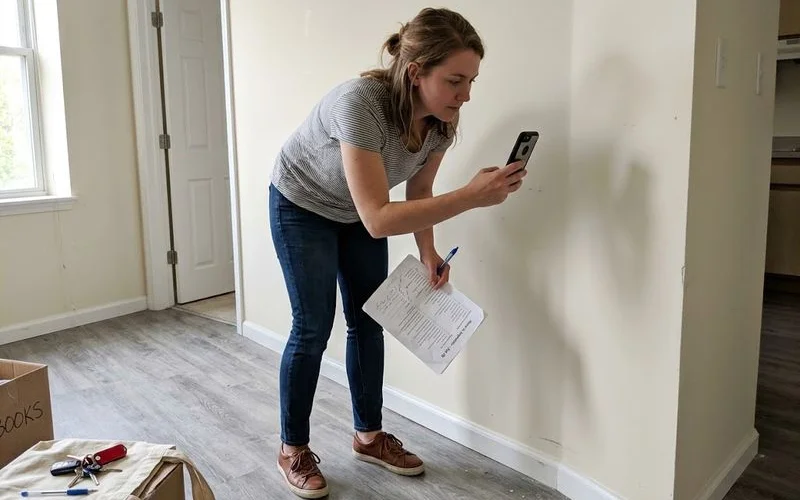
- Document everything at move-in. Photos and video, with a timestamp, of every room and any existing damage.
- Use a written move-in checklist if the property provides one, and keep a copy for yourself.
- Report issues as they happen, in writing, rather than waiting until move-out to mention something.
- Take photos again at move-out, ideally the same day you hand back keys.
- Give your forwarding address in writing, since this can affect the landlord’s deadline to respond.
- Keep copies of all lease-related communication, including maintenance requests, since these can support your case if a dispute ever comes down to what was reported and when.
If a dispute happens anyway
Ask the landlord for the itemized list of deductions in writing if you haven’t received one. Compare it against your move-in and move-out documentation. If the deductions look unreasonable or the process wasn’t followed correctly, Texas offers tenant resources through the Attorney General’s office, and small claims court is a common venue for deposit disputes that can’t be resolved directly. Because remedies and deadlines depend on the specifics of your situation, this is where consulting an official source or an attorney is worth the time rather than relying on general guidance.
Before escalating, it’s often worth sending a single clear, written request asking the landlord to explain or reconsider specific deductions, referencing your documentation. Some disputes resolve at this stage simply because the landlord didn’t have your move-in photos in front of them when the deduction was made. Deposit questions often come up alongside a lease ending early; the breaking a lease in Texas guide covers what that can cost and which legal exceptions may apply.
Most deposit disputes are preventable with good documentation and clear communication, not a legal fight. Starting that habit on day one of your lease is the simplest way to avoid one. For more on how we factor resident feedback like deposit experiences into our rankings, see our scoring methodology, or return to the directory home page to keep exploring DFW communities.
Questions people ask
- How long does a landlord have to return my security deposit in Texas?
- Texas law generally requires landlords to return the deposit, or provide an itemized list of deductions, within 30 days after you move out and provide a forwarding address. Confirm current requirements with an official source, since rules can be amended.
- Can my landlord deduct for normal wear and tear?
- Generally no. Normal wear and tear, like minor carpet fading or small nail holes, typically isn't a valid deduction. Damage beyond normal use, like large stains or broken fixtures, generally can be.
- What should I do before moving out to protect my deposit?
- Document the unit's condition with photos or video at move-in and move-out, keep a copy of your move-in inspection checklist, and give your forwarding address to the property in writing.
- What if my landlord doesn't return my deposit or an itemized list?
- You may have legal remedies if a landlord fails to follow the required process, but the details depend on your specific situation. Consult the Texas Attorney General's tenant resources or a local attorney for guidance specific to your case.